
Views: 0 Author: Site Editor Publish Time: 2026-08-03 Origin: Site


The hidden operational costs of poor material selection often emerge on the factory floor or in customer homes. Prioritizing upfront unit cost over material yield, manufacturing tooling wear, and long-term durability routinely leads to high return rates, warranty claims, and production bottlenecks. Procurement teams and production managers must balance structural integrity, comfort, aesthetic appeal, and regulatory compliance while maintaining profitable margins across varying production scales. You cannot build a reliable product on a foundation of substandard components. This guide provides an evidence-based framework for evaluating, testing, and sourcing the foundational components of furniture and bedding. We move beyond basic aesthetics to examine technical performance, chemical safety, and supply chain reliability. You will learn how to optimize your bill of materials to reduce waste, select application-specific components, and mitigate risks through standardized testing and strict supplier evaluations.
Bill of Materials (BOM) Optimization: Selecting the right structural, functional, and filling components directly dictates manufacturing efficiency, waste reduction, and final product viability.
Application-Specific Sourcing: Engineered woods, metals, and alternative renewables like bamboo offer scalability for structural frames, while high-density foams and technical textiles dictate the lifecycle of upholstery and bedding.
Performance vs. Cost Trade-offs: Synthetic fillings like polyester wadding provide consistent loft and cost-efficiency, whereas natural materials require higher procurement budgets and strict compliance tracking.
Risk Mitigation: Standardized testing (e.g., Martindale rub tests, CertiPUR-US), chemical safety audits, and supplier evaluations are non-negotiable for preventing batch inconsistencies and regulatory failures.
Evaluating raw material costs requires a deep understanding of usable yield on the shop floor. Natural lumber often carries high waste factors due to knots, splits, and irregular grain patterns. You might buy a thousand board feet of oak, but after milling out defects, your actual yield might drop to sixty percent. In contrast, engineered panels allow for optimized nesting during CNC routing, maximizing material usage and minimizing scrap. You must also factor in tooling wear and machining requirements. Different material densities demand specific equipment. High-impact carbide cutters are necessary for dense composites like MDF or phenolic resin boards. Standard steel blades suffice for softwoods but dull rapidly on engineered products. Ignoring these variables skews your true production costs and slows down the assembly line.
Scalability depends on predictable material behavior. When you scale production from fifty units a month to five hundred, material inconsistencies compound. A slight warp in a batch of solid wood can jam automated machinery or require manual hand-fitting, destroying your labor estimates. Engineered materials provide the dimensional stability required for high-volume, automated manufacturing. You must calculate the true cost of a material by including the labor required to process it, the tooling it consumes, and the scrap it generates.
A master BOM must integrate auxiliary but critical components. Structural fasteners, hinges, drawer slides, and architectural glass dictate the functional lifespan of the final piece. A heavy oak door mounted on cheap hinges will sag within months, resulting in warranty claims. You must specify hardware rated for the dynamic loads of the specific furniture piece. When evaluating surface treatments, you must balance premium aesthetics with cost-effective cores. Sourcing natural wood veneer sheets and edge-banding allows you to achieve a high-end finish while utilizing engineered substrates. This approach optimizes the use of Basic Materials without compromising structural integrity.
Surface coatings also play a massive role in the BOM. The choice between a catalyzed lacquer and a water-based polyurethane affects drying times, finishing room ventilation requirements, and final durability. Fast-drying finishes speed up production but may require expensive spray booth setups and strict environmental controls. You must align your secondary components with your factory's capabilities and the product's intended use environment.
Navigating mandatory and voluntary certifications protects your operations from regulatory penalties and consumer backlash. Key certifications include FSC (Forest Stewardship Council) for woods, CertiPUR-US for foams, and OEKO-TEX for textiles. These are no longer optional marketing tools; they are baseline requirements for major retail distribution. Mitigating VOC (Volatile Organic Compound) emissions is equally critical. You must audit adhesives, finishes, and binders used in engineered panels to ensure they meet formaldehyde-free standards like CARB Phase 2 or EPA TSCA Title VI. Consistent compliance tracking prevents costly recalls and factory shutdowns.
Environmental standards also impact waste disposal. Finishing materials with high solvent content require specialized hazardous waste handling. Switching to low-VOC or water-based alternatives can reduce disposal costs and lower insurance premiums for your manufacturing facility. Always request updated Safety Data Sheets (SDS) from suppliers and keep them accessible on the factory floor.
Hardwoods like oak, ash, beech, teak, and olive wood offer high load-bearing capacity and superior fastener retention. Teak provides premium moisture resistance due to its natural oils, making it ideal for outdoor applications. These woods are best suited for premium, exposed-frame seating where the grain is a visual feature. However, hardwoods require slower feed rates during milling to prevent burning and tear-out. Softwoods, such as pine and spruce, are cost-effective for hidden structural frames in upholstered goods. They are easy to machine and lightweight. However, they require specific joint engineering—like dowels or mortise and tenon—and strict moisture monitoring to prevent long-term warping or fastener pull-out under stress.
Moisture content (MC) is the single biggest variable in solid wood manufacturing. Wood expands and contracts with ambient humidity. If you assemble a frame using wood with a 12% MC in a humid environment, and ship it to a dry climate, the wood will shrink. Joints will open, and frames will crack. You must specify kiln-dried lumber with an MC between 6% and 8% for indoor furniture, and strictly control the climate in your storage and assembly areas.
Engineered panels provide dimensional stability and predictable yields. Selecting the right panel depends entirely on the application and the load it must bear.
Plywood (Cabinet Grade): Offers a superior strength-to-weight ratio and excellent moisture resistance due to alternating grain layers. It holds screws exceptionally well and is ideal for bed bases and structural upholstery frames.
MDF (Medium Density Fiberboard): Excellent for veneering and precision routing due to its smooth, uniform surface. It lacks structural strength for long spans and remains highly vulnerable to moisture and heavy point-loads.
Particleboard: The lowest cost tier. It is suitable only for non-load-bearing panels and flat-pack applications requiring comprehensive edge-banding to prevent moisture ingress and off-gassing.
Blockboard (Furniture Board): A lightweight core alternative made of solid wood strips sandwiched between veneers. It offers high dimensional stability and is ideal for long shelving and core panel construction where weight is a concern.
Alternative renewables offer distinct structural advantages for specific design profiles. Bamboo features exceptional tensile strength, rapid replenishment rates, and natural resistance to warping. It machines similarly to dense hardwoods and is highly suited for sustainable structural components. However, bamboo requires specialized adhesives due to its dense fiber structure and natural silica content, which can rapidly dull cutting tools. Rattan provides high elasticity and a lightweight profile. It is ideal for organic aesthetic styling and lightweight, load-bearing bentwood designs. Rattan requires steam-bending techniques and manual assembly, making it less suitable for highly automated production lines but excellent for artisanal or specialized manufacturing.
Steel and aluminum alloys dominate commercial, industrial, and outdoor furniture applications. When evaluating metals, you must assess gauge thickness, weldability, and structural geometry. A 16-gauge steel tube offers significantly more strength than an 18-gauge tube, but adds weight and requires different welding parameters. MIG welding is fast and suitable for hidden joints, while TIG welding provides clean, precise welds for exposed metal frames. Powder-coating adhesion profiles are critical to prevent oxidation and structural fatigue over time. The metal must be thoroughly cleaned and pre-treated (often with iron phosphate) before coating to ensure the finish does not flake off under impact.
Polyurethane (PU) and memory foams form the core of most modern upholstery. Evaluating density (lbs/cu.ft) and Indentation Load Deflection (ILD) is necessary to determine structural longevity and support profiles. Density dictates how long the foam will last before breaking down; ILD dictates how firm the foam feels. A high-density foam can be soft, and a low-density foam can be firm. For seat cushions, you need high density (1.8 lbs/cu.ft or higher) to prevent the cushion from bottoming out after a year of use. Natural and synthetic latex offer alternative comfort solutions. When assessing latex for premium mattress production, you must evaluate temperature regulation, natural antimicrobial properties, durability, and potential weight penalties. Dunlop latex is denser and better for support cores, while Talalay latex is softer and ideal for top comfort layers.
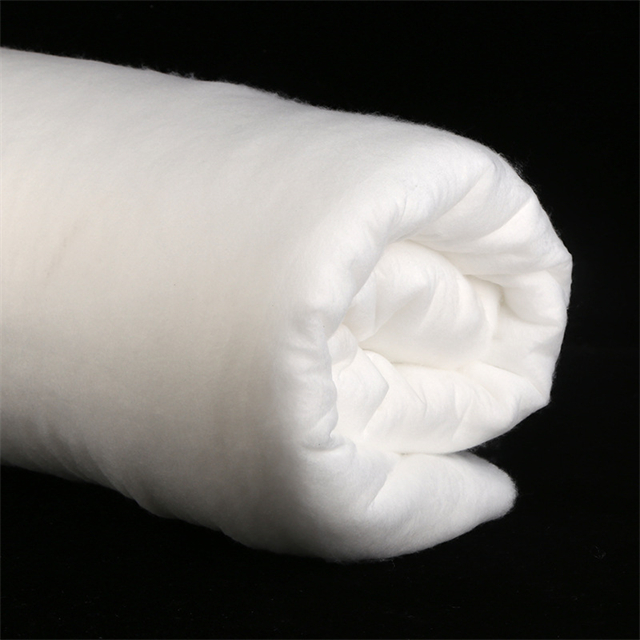
Synthetic fillings play a structural role in upholstery that goes beyond simple comfort. Polyester Wadding creates loft, softens sharp frame edges, and prevents friction-induced wear between the inner foam core and the outer upholstery fabrics. Without this barrier, the abrasive backing of many textiles will shred the foam underneath. When evaluating these fibers, look at thermal retention, moisture-wicking properties, and compression recovery over extended duty cycles. Synthetic fibers offer significant advantages in supply chain stability and batch-to-batch consistency compared to natural alternatives. They do not harbor dust mites or mildew, making them ideal for hypoallergenic product lines.
Filling Material | Primary Application | Key Advantages | Manufacturing Considerations |
|---|---|---|---|
High-Density PU Foam | Seat cushions, mattress cores | High support, predictable ILD | Requires off-gassing time, CertiPUR-US certification needed |
Polyester Wadding | Edge softening, quilt batting | Consistent loft, hypoallergenic | Must be properly bonded to prevent shifting during use |
Natural Latex | Premium mattresses | Antimicrobial, highly durable | Heavy, requires specialized cutting tools, higher procurement cost |
Memory Foam (Viscoelastic) | Mattress toppers, lumbar support | Excellent pressure relief | Temperature sensitive, can retain body heat |
Natural fillings are positioned for luxury, organic, and bespoke product tiers. Cotton, wool, and down offer exceptional breathability and premium comfort. Wool acts as a natural fire retardant, which can help bedding products pass flammability standards without chemical additives. Down provides unmatched loft and softness for premium back cushions. However, sourcing these materials involves managing supply chain volatility and agricultural price fluctuations. You must also adhere to stringent anti-allergen processing requirements. Down must be thoroughly washed and sterilized to remove organic matter, and you must track the fill power to ensure consistent quality across production runs.
Performance synthetics offer high resistance to abrasion, fading, and staining. They are essential for high-traffic environments like hotels, restaurants, and busy households. When selecting these fabrics, evaluate double-rub counts using Wyzenbeek or Martindale testing standards. A fabric rated for 15,000 double rubs is suitable for light residential use, while commercial applications demand 50,000 to 100,000+ double rubs. Olefin is particularly useful for outdoor or high-spill areas because it is inherently stain-resistant and colorfast, as the color is added during the fiber extrusion process rather than dyed later.
Cotton and linen provide high breathability and a premium hand-feel. This must be balanced against their susceptibility to wrinkling, fading under UV light, and lower stain resistance. Leather selection requires analyzing tensile strength and natural patina development. You must evaluate top-grain versus split leather. Top-grain leather retains the strong outer layer of the hide, offering superior durability and a natural look. Split leather is weaker and often heavily pigmented or embossed to hide flaws. When calculating leather yields, you must factor in significant waste due to natural hide imperfections like brands, scars, and belly wrinkles. A 50-square-foot hide might only yield 35 square feet of usable upholstery material.
Industrial coatings protect foundational components from mechanical wear, UV degradation, and moisture ingress. Selecting the right finish extends the lifespan of the product and maintains its aesthetic appeal under daily use. Polyurethane lacquers offer a hard, durable shell ideal for tabletops and high-wear surfaces. Acid-catalyzed finishes provide excellent chemical resistance but require strict safety protocols during application due to formaldehyde emissions. Natural oils and waxes offer a close-to-the-wood feel and are easy to repair, but require regular maintenance by the end-user and offer minimal protection against heat and standing liquids.
Relying on a single source for critical components introduces severe supply chain vulnerabilities. A localized disruption can halt your entire assembly line. You must establish acceptable tolerance levels for color matching across dye lots. A fabric ordered in January might have a slightly different hue than the same fabric ordered in June. Strict parameters for moisture levels and material density prevent manufacturing defects. Diversifying suppliers mitigates the risk of production halts. Qualify at least two suppliers for every critical component on your BOM, ensuring they meet the exact same technical specifications.
Robust quality control starts at the receiving dock, long before materials hit the cutting room floor. Catching variances early saves significant rework costs and prevents defective products from reaching the consumer.
Implement moisture meter checks for all incoming lumber shipments. Reject any batch that falls outside the 6% to 8% range for indoor furniture.
Conduct in-house compression and recovery tests for foams. Cut a sample, compress it by 50% for 24 hours, and measure its recovery time and final thickness.
Verify fabric rolls against approved master swatches under standardized D65 daylight bulbs to ensure dye lot consistency.
Check the gauge and weld integrity of incoming metal frames using digital calipers and visual weld inspections.
Review updated certification documents (FSC, CertiPUR-US) for every new batch of regulated materials.
Audit your current BOM to identify areas where engineered panels can replace high-waste natural lumber without sacrificing structural integrity.
Implement standardized incoming quality control checks, including moisture reading for woods and compression testing for foams.
Diversify your supplier base for critical textiles and fillings to protect against regional supply chain disruptions.
Require verifiable certifications from all vendors before approving new materials for production.
A: Foam density dictates durability, not firmness. For high-traffic residential or commercial seating, specify a density of at least 1.8 to 2.0 lbs/cu.ft. Use Indentation Load Deflection (ILD) ratings to specify the actual firmness or feel of the cushion.
A: Incorrect moisture content leads to warping, cracking, and joint failure after assembly. Wood must be kiln-dried to match the equilibrium moisture content of its final destination, typically between 6% and 8% for indoor furniture.
A: Both measure fabric abrasion resistance. Wyzenbeek rubs fabric back and forth, which is common in North America. Martindale rubs in a figure-eight motion, common in Europe. Higher counts indicate better durability for commercial use.
A: No. Particleboard lacks the structural integrity and tensile strength for load-bearing spans. It sags under sustained weight. Use plywood or solid wood for structural frames and limit particleboard to non-load-bearing panels.
A: It acts as a friction barrier between the inner foam core and the outer textile. This prevents the fabric from wearing down the foam prematurely, while also adding initial surface softness and maintaining a smooth, tailored appearance.
A: Engineered wood provides superior dimensional stability, meaning it will not warp or crack with humidity changes. It also offers better yield rates, reducing waste and lowering overall material costs for large production runs.


