
Views: 0 Author: Site Editor Publish Time: 2026-02-03 Origin: Site


Have you ever struggled to find the perfect pillow insert? A pillow insert that’s too small or too large can affect both comfort and appearance. In this article, we will discuss how to accurately measure a pillow insert. You’ll learn how the right insert size can create a plush, comfortable pillow that fits perfectly.
Accurate measurement of pillow inserts directly affects both the comfort and appearance of your pillows. The right size ensures a full, firm look, while the wrong size can lead to a saggy or overly bulky pillow. Properly sized inserts give the pillow the desired support without distorting the pillow cover’s shape. A pillow with the right insert size will maintain a crisp, structured look and provide the perfect balance of softness and firmness.
When measuring pillow inserts, many people overlook loft (thickness), which plays a significant role in the pillow's final fit. Measuring only the length and width may result in an insert that is either too thin or too thick for the cover. To avoid this, always measure the pillow insert when it is fully fluffed and laid flat. This ensures the dimensions you’re working with reflect the pillow's true shape, especially after it has been fluffed back to its natural loft.
Decorative pillows often require inserts that are slightly larger than the cover to create a fuller, overstuffed appearance. Typically, an insert that is 1–2 inches larger than the cover will achieve the desired effect. On the other hand, functional pillows, like those used for sleeping, need a closer fit to provide comfort and support. In these cases, a pillow insert that matches the cover size closely is preferred to avoid excess bulk that could interfere with its intended use.
To measure pillow inserts accurately, a flexible measuring tape is essential. Rigid tools, like metal rulers, cannot conform to the pillow’s shape and may yield incorrect measurements. Place the pillow on a flat, level surface to avoid wrinkles or bunching, which could distort the size. Using a flexible tape allows you to measure all dimensions, including those that require a more precise contour.
A flexible measuring tape is the ideal tool for measuring pillow inserts, as it can bend to follow the contours of the pillow’s seams and edges. This makes it more reliable than rigid measuring tools, especially when dealing with pillows that have a loft or curvature. It also provides an accurate reading of the thickness or loft, ensuring the pillow insert fits perfectly and supports your preferred pillow shape.
Rigid measuring tools can lead to several errors when measuring pillow inserts. Since they cannot conform to the pillow's shape, measurements may be inaccurate, especially if the pillow is not laid flat. Additionally, they may fail to measure the pillow’s loft, which is crucial for a well-fitting insert. Using a flexible tape measure ensures you get the most accurate measurements, even if the pillow isn’t perfectly flat, giving you the best possible fit for your pillow cover.
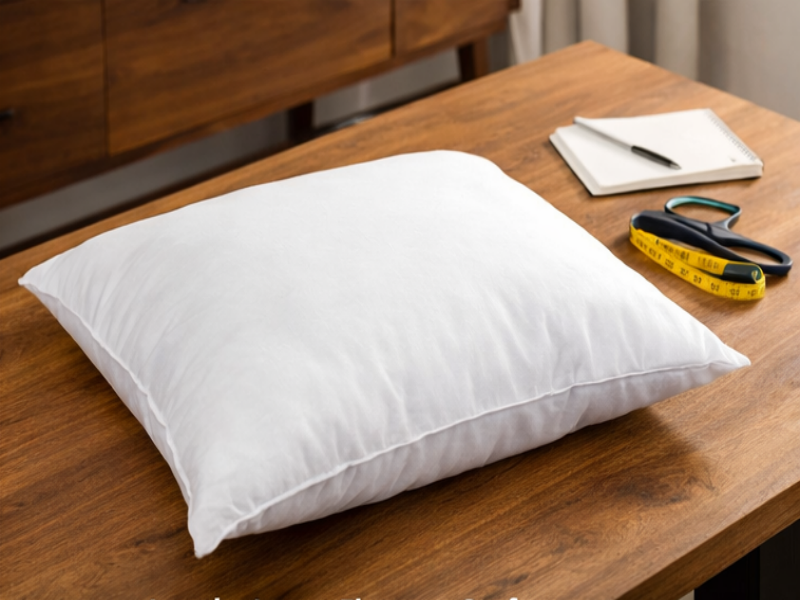
To measure a pillow insert accurately, follow these clear and simple steps to ensure precise results:
1. Remove the Insert from the Cover Before you start measuring, take the pillow insert out of the pillow cover. This ensures that the cover doesn’t interfere with the measurement. If the pillow is already inside a cover, it can alter the shape, especially if the cover is snug or stretches.
2. Lay the Insert Flat on a Surface Lay the pillow insert on a flat, clean surface. It's important that the pillow is not compressed, as that can lead to inaccurate measurements. If the pillow is uneven or lumpy, smooth it out gently without squishing it to achieve the true dimensions.
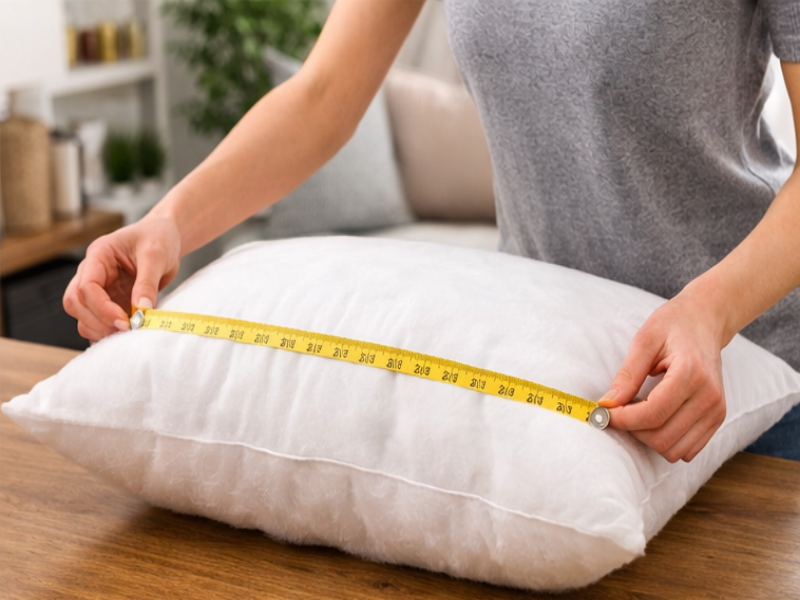
3. Measure Along the Seam Lines Without Compressing the Pillow Use a flexible measuring tape to measure the length and width of the pillow insert. Place the measuring tape along the seam lines from one side to the other. Ensure you are measuring across the broadest points of the pillow, making sure the tape is straight and not pulling the fabric too tight. Always avoid compressing the pillow, as doing so can reduce the pillow’s overall size.
To avoid common measuring mistakes, follow these helpful tips for a more accurate result:
● Use a Flexible Measuring Tape: Unlike rigid rulers, a flexible measuring tape can contour to the pillow’s shape and provide more precise measurements, especially around curves or seams.
● Check the Loft: When measuring, consider the loft (thickness) of the pillow. Always measure the pillow’s full height when fluffed, as this will affect how it fits inside the cover.
● Avoid Compression: Don’t press or squeeze the pillow during measurement, as it will reduce the loft and give you incorrect dimensions. Let the pillow rest naturally on the surface.
● Double-Check: Measure both the length and width twice to ensure accuracy. A slight variation in measurement can result in a poor fit, especially if the pillow is slightly larger or smaller than the cover.
When measuring pillow inserts, there are a few common mistakes that can affect the accuracy of your measurements:
● Measuring the Pillow While it’s Compressed Compressing the pillow during measurement can result in a smaller measurement. Always ensure the pillow is fully fluffed and not compressed in any way to get the accurate dimensions.
● Using Rigid Tools Rigid measuring tools such as metal rulers can distort the true dimensions of the pillow, especially if it’s not perfectly flat. Always use a flexible measuring tape for more accurate results.
● Ignoring Shrinkage Many pillow covers, especially cotton ones, shrink slightly after washing. If you’re measuring for a new insert, be sure to account for this shrinkage by choosing an insert that is slightly larger than the pillow cover.
Measuring square pillow inserts is straightforward. To get the most accurate measurement, measure the length and width of the pillow insert from seam to seam. For example, a 20"x20" pillow cover should have a 20"x20" insert, though for a fuller look, it can be slightly larger. Ensure that the pillow is fluffed and not compressed to reflect its actual size.
When measuring rectangular pillow inserts, such as those used for lumbar or bolster pillows, start by measuring both the length and width of the pillow. For lumbar pillows, the width is typically narrower, while the length can vary depending on the design. Adjust the insert size based on the cover size to ensure a proper fit, keeping in mind that rectangular pillows may require a different insert depending on whether you want a firmer or softer feel.
Overstuffed pillows need a slightly larger insert to achieve the desired fullness and maintain their shape. For example, if your pillow cover is 18"x18" and you want a fuller look, a 20"x20" insert will provide the necessary volume. This extra size helps the pillow retain its plumpness and prevents the cover from appearing loose.
Here’s a quick overview of the recommended insert sizes for different pillow cover dimensions:
Pillow Cover Size | Recommended Insert Size | Insert Size Difference |
Small pillows (under 18") | 1" larger than cover size (e.g., 16"x16" cover = 17"x17" insert) | 1" larger |
Larger pillows (18" and above) | 2" larger than cover size (e.g., 20"x20" cover = 22"x22" insert) | 2" larger |
Rectangular pillows | Insert size depends on length and width; generally 1-2" larger than cover | Varies by design |
To ensure your pillows look full and well-stuffed, select an insert that is 1-2 inches larger than the pillow cover. This extra size prevents the pillow from looking flat and ensures it holds its shape over time. For small pillows, a 1-inch larger insert works well, while larger pillows typically require a 2-inch difference.
For custom-sized pillows, start by measuring the length and width of the pillow cover. Add the recommended 1-2 inches (depending on the pillow size). For irregular shapes such as round pillows, measure the circumference or height to determine the proper insert size. Adjust the insert size according to the desired fullness and comfort.
When selecting a pillow insert, the material plays a significant role in both comfort and durability. Here are some of the most common pillow insert materials:
Material | Features | Best For |
Micro Polyester Fiber | Lightweight, hypoallergenic, soft, inexpensive | Budget-friendly, soft pillows |
Polyester PP Cotton | Durable, resilient, retains shape, hypoallergenic | Pillows requiring consistent support |
Siliconized Hollow Polyester Fiber | Lofty, soft, holds shape well, provides extra fluff | Decorative pillows, fluffy appearance |
The material of the pillow insert has a direct impact on the fit and feel. Softer materials like micro polyester fiber tend to create a plush, squishy pillow, while firmer materials such as polyester PP cotton provide more structure and support. Siliconized hollow polyester fibers offer a blend of both, giving the pillow a soft feel while maintaining its shape.
The choice of material also influences how the pillow feels when you use it. For example, softer materials are more suitable for decorative pillows where a "center chop" look is desired, while firmer materials are better for functional pillows that require more support, such as for sleeping or back support.
● For Allergy Sufferers: Synthetic materials, particularly polyester-based options like micro polyester fiber and polyester PP cotton, are ideal for individuals with allergies. These materials are resistant to dust mites and mold, making them safer for those sensitive to allergens.
● For the Center Chop Look: If you desire the iconic "karate chop" look, which is often associated with high-end decorative pillows, choose a pillow insert made of siliconized hollow polyester fiber or down alternative materials. These inserts hold their shape well and provide the softness needed for this aesthetic.
● For Fluffiness and Comfort: For a soft, fluffy feel that can be fluffed back into shape, consider down alternative materials. These inserts maintain their volume over time, offering a cozy and supportive option for decorative pillows.
If your pillow insert is too small for the cover, it will likely leave gaps or appear deflated. To resolve this, consider upgrading to a larger insert, typically 1–2 inches larger than the cover for a fuller look. For smaller pillows, simply add an extra inch, and for larger pillows, adding 2 inches can significantly improve the appearance.
In some cases, you can also layer an additional smaller insert within the pillow cover, but this may not provide as seamless an appearance.
If the pillow insert is too large, it will cause the cover to stretch, potentially damaging the seams or zipper. In this case, you can remove some of the filling to reduce the size. Be cautious not to remove too much, as this could affect the insert’s loft and support. Alternatively, replacing the insert with a slightly smaller one will allow the cover to fit better.
Pillow inserts often lose their shape over time due to use. Fluffing the pillow by hand or tossing it in the dryer with a low heat setting can restore some of its original loft and improve its appearance. If your insert is too large and you need to compress it, simply apply gentle pressure while it’s in the cover to help it settle into the desired shape. Regular fluffing will help maintain the insert’s size and shape for a more consistent fit.
Choosing the right pillow insert size is crucial for both comfort and aesthetics. Accurate measurements ensure that your pillow fits snugly and maintains its shape. Follow the steps outlined to achieve the perfect balance of firmness and softness. At Dongguan Yuexin Industrial Co., Ltd., we offer a wide range of high-quality pillow inserts that provide consistent support and comfort, ensuring a perfect fit for every pillow cover.
A: A pillow insert is a filling used inside pillow covers to provide structure, comfort, and support. In B2B settings, it is commonly used for manufacturing decorative or functional pillows in various industries, including hospitality, furniture, and bedding.
A: The right pillow insert should be chosen based on size, material, and firmness required for the intended application. Consider durability, ease of maintenance, and the specific needs of the client or end product, such as comfort or aesthetic appeal.
A: When measuring pillow inserts, ensure consistency in size and loft across large batches. Accurate measurements are crucial to ensure proper fit, maintain product quality, and prevent waste during manufacturing.
A: The cost of pillow inserts varies depending on the material (e.g., polyester, down alternative) and the quality required. While synthetic fibers are cost-effective, premium options like siliconized polyester may incur higher costs but offer greater durability and comfort in the long run.
A: Pillow inserts with materials like polyester PP cotton or siliconized polyester typically require low maintenance. However, over time, inserts may lose shape and need to be fluffed or replaced to maintain comfort and appearance. Regular maintenance helps extend their lifespan, especially in high-use environments.


