
Views: 0 Author: Site Editor Publish Time: 2026-06-26 Origin: Site


Choosing the wrong spill control products introduces severe operational risks. Inefficient absorption immediately leads to heavier disposal loads, safety hazards, and potential regulatory fines. Facility managers know we simply cannot afford failed spill responses in high-stakes environments. Ultimately, an absorbent pad’s effectiveness relies entirely on its specific material composition and the manufacturing process behind it. You cannot just grab a generic rag for a hazardous hydrocarbon leak. You need specialized materials engineered precisely for the job. This comprehensive guide breaks down the exact science of absorbent materials. We explore strict evaluation criteria for smart procurement. You will also learn how to accurately match pad composition to specific industrial, marine, and environmental applications. Armed with this knowledge, you can effectively secure safer facility floors and guarantee cleaner local waterways.
Meltblown polypropylene is the industry standard for oil-only spills due to its oleophilic (oil-attracting) and hydrophobic (water-repelling) properties.
Alternative materials like treated cellulose or cotton offer sustainability benefits but require careful evaluation regarding retention and disposal compliance.
Material construction (dimpled, fine fiber, single-ply) is just as critical as the base material for determining durability and specific use cases.
Procurement decisions should be based on "cost-per-gallon absorbed" and hazmat disposal weight rather than the upfront cost-per-pad.
Synthetic polymers dominate the modern spill control industry. Manufacturers specifically choose polypropylene to create top-tier Polypropylene Oil Absorbent Pads. This material offers incredible performance advantages. It handles harsh industrial environments beautifully. Polypropylene fibers create massive surface areas. They trap liquids efficiently within their microscopic structures. We rely on these synthetics because they perform consistently under pressure. They rarely fail during critical response moments.
You must understand the distinct molecular mechanics at play. Polypropylene acts in two very specific ways. First, it is inherently hydrophobic. It actively repels water on a molecular level. Second, it is highly oleophilic. It rapidly attracts and draws in hydrocarbons. This includes motor oil, diesel fuel, gasoline, and heavy industrial lubricants. When a pad touches a mixed spill, it ignores the water entirely. It only drinks up the hazardous oil.
These mechanics translate to massive operational advantages. Marine crews, outdoor construction teams, and wet industrial plants rely heavily on them. Polypropylene pads will not sink. They remain perfectly buoyant. They stay afloat even when fully saturated with thick, heavy crude oil. You can leave them deployed on a retention pond for days. They continue to float, making retrieval incredibly easy and safe.
However, we must address one crucial implementation note. Raw polypropylene degrades under prolonged UV exposure. Sunlight slowly breaks down the synthetic fibers. Over months of direct sunlight, untreated pads become brittle. They will eventually flake apart into the environment. Unless the manufacturer specifically treats them for UV resistance, you must store your inventory indoors. Keep your emergency spill kits shaded.
Pre-deploy pads around machinery known to leak lubricating fluids.
Use booms alongside pads to contain spills on open water before absorption.
Rotate your outdoor spill kits annually to prevent hidden UV degradation.
Many facilities now explore natural organic fibers. They want sustainable alternatives to standard synthetics. Manufacturers use materials like cotton, cellulose, wool, and even peat moss. These organics offer distinct environmental profiles. They appeal strongly to environmentally conscious procurement teams. However, they perform very differently than synthetic polymers.
By default, natural fibers absorb everything. They soak up water just as eagerly as they soak up oil. Manufacturers must apply synthetic chemical treatments to change this behavior. They coat the cellulose or cotton fibers to make them hydrophobic. Without these specialized treatments, organic pads absorb surrounding water immediately. They become waterlogged, heavy, and sink to the bottom of the tank.
Procurement teams must weigh specific pros and cons here. On the advantage side, organics support corporate ESG (Environmental, Social, and Governance) goals. They utilize renewable, earth-friendly resources. On the risk side, organic fibers often lose structural integrity when wet. They turn mushy or fragile. Worse, they might leach oil if you compress them. If a worker steps on a saturated cotton pad, it often squeezes oil back onto the floor.
We must also contrast pads with mineral-based options. Historically, mechanics used loose granular absorbents like clay or vermiculite. Loose granulars create dusty, messy environments. They track all over the facility. Pads offer a much cleaner, far more efficient recovery method. Sweeping up oil-soaked clay wastes precious labor hours. Pads simply require you to pick them up and dispose of them.
Deploying untreated cellulose pads on outdoor puddles, causing them to absorb rain.
Assuming organic pads naturally repel water without checking the manufacturer specifications.
Using fragile natural fibers to wipe down abrasive machinery, causing them to shred.
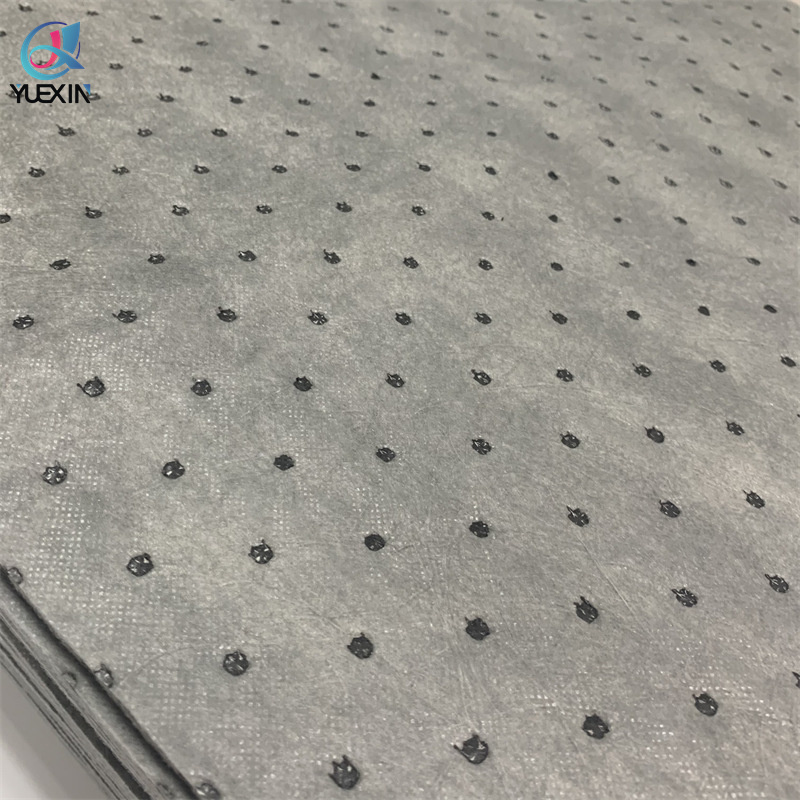
The base material only tells half the story. The manufacturing process dictates how the pad physically behaves. Meltblown extrusion serves as the industry baseline. Machines spin molten polypropylene into a random, chaotic web of fibers. This process creates excellent void space. It maximizes the amount of liquid the pad can hold. Meltblown pads work best for high-volume, static spill recovery. However, basic meltblown pads tear easily under tension.
To fix this tearing issue, manufacturers use sonic bonding. Ultrasonic welding points bind the loose fibers together. We often call these points "dimples." Sonic bonding dramatically increases the overall tensile strength. It heavily reduces random tearing and fraying. This dimpled construction makes them ideal for demanding physical tasks. You can use them to vigorously wipe down sharp tools or heavy machinery.
For even higher durability, manufacturers add fine fiber or spunbond covers. They laminate a tightly woven outer layer to the top and bottom of the pad. This creates a remarkably smooth, lint-free surface. We consider this essential for sensitive environments. You need spunbond covers for cleanrooms, aviation equipment, or high-traffic walkways. The cover prevents the internal fibers from shedding.
Buyers must apply a strict decision lens here. You must specify the construction type based on your exact application. Avoid using standard, unbonded meltblown pads for abrasive wiping. They will quickly shed fibers and cause severe lint contamination. Match the physical durability of the pad to the aggression of the task.
Construction Type | Physical Characteristics | Ideal Application |
|---|---|---|
Standard Meltblown | Loose fibers, highly porous, lower strength | Static liquid recovery, gentle drips |
Sonic Bonded (Dimpled) | Welded points, moderate strength, textured | Tool wiping, uneven surfaces, general maintenance |
Fine Fiber / Spunbond | Smooth outer layer, lint-free, high strength | Cleanrooms, foot traffic areas, sensitive parts |
Material selection directly impacts workplace safety and environmental protection. OSHA strictly monitors slip-and-fall hazards in industrial settings. Leaving oil on the floor guarantees compliance violations and worker injuries. The EPA strictly monitors environmental contamination. You must prevent oil from reaching vulnerable storm drains and local waterways. The right absorbent material ensures you meet these rigorous agency standards.
Leachability and retention rank among the most critical material metrics. A pad must hold onto oil tightly. When you lift a saturated pad, it should not drip excessively. Retention under pressure is absolutely critical for compliant transport. If you place saturated pads into a disposal drum, the bottom layers face immense compression. High-quality materials refuse to leach liquid back out under this pressure.
Disposal weight economics often surprise new facility managers. Lightweight synthetic materials significantly reduce your back-end disposal costs. Landfills and hazardous waste incinerators typically bill by total weight. Heavy clay, sand, or water-logged cotton drastically drives up your disposal invoices. Using lightweight polypropylene ensures you only pay to dispose of the oil itself, not a heavy base material.
Flammability risks demand your immediate attention. You must note the flashpoint considerations of the materials you select. Synthetics can occasionally build a static charge. In highly volatile vapor zones, a static spark causes catastrophic explosions. You must specify anti-static treated materials when working around aviation fuel, pure solvents, or within explosive atmospheres.
Verify the pad retains oil when lifted vertically.
Confirm the material does not absorb non-hazardous water weight.
Ensure anti-static properties if deploying in volatile vapor zones.
Review local disposal weight limits for hazardous drums.
Procurement teams need a repeatable process. You must eliminate guesswork from spill control purchasing. We recommend a four-step framework. This ensures you acquire the exact Oil Absorbent Pads required for your specific operational hazards.
Step 1: Verify the Fluid Profile
Determine exactly what liquids you need to capture. Are you handling strictly hydrocarbons like diesel and motor oil? Choose Oil-Only pads. Do you need to clean up coolant, water, and mild solvents simultaneously? Choose Universal pads. Are you managing aggressive acids or unknown caustic chemicals? You strictly need specialized Hazmat pads.
Step 2: Assess the Environment
Look closely at your deployment zones. Will you deploy the product on open water? You need pure, untreated meltblown that stays afloat. Will you place it outdoors in the rain? You need hydrophobic materials. Will you lay it indoors under heavy forklift traffic? You strictly require a heavy-duty spunbond cover to survive the tires.
Step 3: Calculate Absorption Capacity Requirements
Match the pad weight to the volume of the leak. Standard, daily drips require lightweight pads. They are economical and easy to swap. A major drum puncture or emergency spill response requires heavyweight, high-capacity pads. Never use lightweight pads for major emergencies; your team will waste time constantly swapping saturated pads.
Step 4: Analyze Absorption Efficiency and Disposal Metrics
Shift your purchasing focus away from the basic unit price. Look purely at efficiency metrics. Calculate the total volume absorbed versus the estimated disposal weight. A cheap pad often absorbs very little oil. It forces you to use five times as many pads. This exponentially increases your disposal weight and hazmat incineration fees. High-efficiency materials drastically reduce your back-end waste loads.
Selecting the correct spill control material secures your operational safety. Polypropylene remains the undisputed market leader for absorbing hydrocarbons. However, the exact construction style and weight must precisely align with your facility's unique risks. Using an unbonded pad for abrasive wiping fails just as quickly as using a natural fiber pad on open water. You must match the specific material engineering to the physical task at hand.
Take immediate action to optimize your facility's readiness. Audit your current spill kits this week. Verify you have the correct material profiles for your specific fluid hazards. Request physical material samples from suppliers to run field tests. Consult a technical sales representative to review your retention needs and disposal metrics. Upgrading your absorbent inventory today prevents catastrophic compliance failures tomorrow.
A: Some high-durability pads can be wrung out and reused temporarily. However, their absorption capacity drops significantly after the initial squeeze. Furthermore, strict hazmat protocols usually dictate single-use disposal to prevent dangerous cross-contamination and ensure maximum safety compliance across the facility.
A: True oil-only polypropylene pads will not sink because they remain entirely hydrophobic. If a pad sinks, it is either saturated with heavy physical debris, improperly manufactured, or you mistakenly used a universal pad on water. Always verify the pad classification before aquatic deployment.
A: They boast a virtually indefinite shelf life when stored correctly. The synthetic material itself does not expire. However, exposing them to extreme heat or prolonged UV rays will eventually degrade the fibers over the years. Store your inventory in dry, climate-controlled environments.
A: The clean pad itself is never considered hazardous. However, once used, it inherits the exact hazardous classification of the liquid it absorbed. If you soak up hazardous chemicals or heavy fuels, you must follow strict local disposal regulations for that specific chemical waste.


