
Views: 0 Author: Site Editor Publish Time: 2026-06-27 Origin: Site


Industrial spills represent more than mere environmental hazards; they pose immediate threats to operational continuity, worker safety, and strict regulatory compliance. A sudden leak can quickly halt production lines. It can endanger personnel with severe slip hazards. It can also trigger massive regulatory penalties if improperly managed. In this high-stakes environment, Oil Absorbent Pads serve as the crucial first line of defense in an organization's spill control protocol. Facility managers rely on them to rapidly contain unexpected leaks before they escalate into dangerous emergencies.
While granular absorbents or industrial vacuums certainly have their designated place in routine maintenance, the unique material science and instant deployment capabilities of these pads make them undeniably critical. You need them for specific, urgent scenarios where time is the ultimate factor. In the following sections, you will discover the engineering principles behind these essential safety tools. You will also learn how to select the exact pad for your risk profile and implement actionable strategies to standardize your facility's response.
Targeted Efficiency: Oil absorbent pads leverage specific polymer structures (oleophilic and hydrophobic) to isolate hydrocarbons without wasting capacity on water.
Compliance Alignment: Standardized color-coding (white for oil-only, gray for universal, yellow for hazmat) streamlines OSHA and EPA compliance during emergency response.
Operational Economics: Evaluating pads based on absorbency-to-weight ratios reduces hidden secondary costs, specifically hazardous waste disposal volume.
Known Limitations: Pads are optimized for specific spill volumes; massive or continuous leaks often require integrated solutions (booms, vacuums) alongside pads.
Understanding how a spill pad works requires a brief look at modern polymer engineering. Manufacturers do not simply weave these pads like traditional textiles. Instead, they engineer them at a microscopic level to perform highly specific chemical interactions.
The core of most high-quality spill pads is melt-blown polypropylene. During manufacturing, machines extrude melted polymer through tiny nozzles into high-velocity air streams. This creates a dense, random web of microfibers. This specific microfiber structure provides immense surface area. Polypropylene naturally exhibits two critical chemical traits. First, it is extremely oleophilic. It attracts oil, hydrocarbons, and petroleum-based fluids like a magnet. Second, it is highly hydrophobic. It physically repels water molecules. This dual-action nature allows the pad to pull oil directly out of puddles or water bodies without absorbing a single drop of moisture.
Many legacy facilities still rely on outdated spill control methods. You might see maintenance crews tossing clay granules onto a spill. You might see them throwing old cotton rags at a leaking valve. Objective performance data strongly favors engineered pads over these older techniques.
Abrasive Residue: Clay granules create fine silica dust. This dust easily becomes airborne and settles into sensitive machinery. Over time, it destroys bearings and degrades moving parts. Polypropylene pads leave absolutely no abrasive residue behind.
Retention Rates: Cotton rags absorb fluids, but they release them immediately when picked up. They drip across the floor during cleanup. Melt-blown polymers trap fluids within their capillary structures. They hold onto the oil tightly during transport and disposal.
Deployment Speed: Sweeping up heavy, saturated clay takes significant time and physical labor. A worker can drop a pad, let it absorb, and pick it up in seconds.
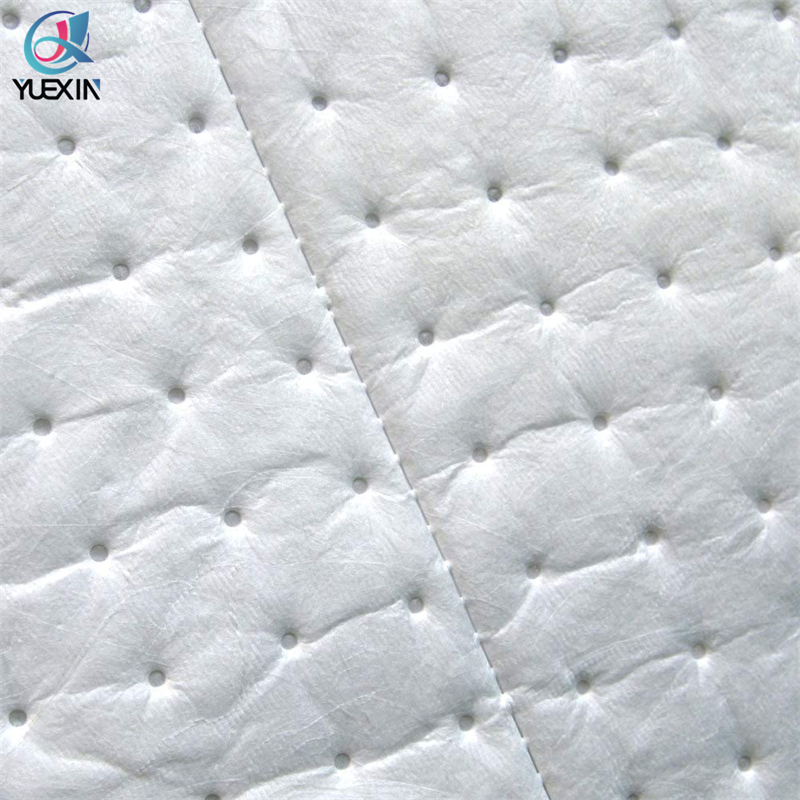
Physical construction dramatically alters a pad's durability. Manufacturers often add dimples across the pad's surface. These small thermal bonds fuse the fiber layers together. Dimpling creates dedicated wicking channels. It forces the oil to spread rapidly across the entire surface area, increasing absorption speed. For high-traffic areas, manufacturers add spun-bond outer layers. This lamination process sandwiches the absorbent core between tough, webbed covers. It prevents the pad from tearing, fraying, or disintegrating when workers walk on it or drag equipment over it.
Purchasing the wrong category of absorbent can lead to catastrophic failure during a true emergency. Facility managers must treat this selection process as a critical procurement guide. If you deploy an indoor pad on an outdoor puddle, it will saturate with water instantly. It will leave the hazardous oil untouched. You must match the product precisely to your environmental risk.
Standard Spill Pad Color Coding and Applications | |||
Color Code | Type Designation | Fluid Compatibility | Ideal Environment |
|---|---|---|---|
White | Oil-Only | Hydrocarbons, fuels, motor oils, grease. | Outdoors, marine environments, wet floors. |
Gray | Universal | Coolants, solvents, water, oils. | Indoor manufacturing floors, maintenance bays. |
Yellow | Hazmat | Aggressive acids, bases, unknown chemicals. | Laboratories, chemical storage units. |
White pads represent the pinnacle of targeted efficiency. They actively repel water while aggressively drawing in hydrocarbons. Because they reject water, they will float indefinitely on lakes, retention ponds, or drainage ditches. They are essential for marine environments. They are also perfect for factories where machinery leaks oil onto floors already wet from washdowns. Using designated Oil Spill Absorbent Pads ensures you never waste absorbent capacity on harmless water.
Gray pads serve as the versatile workhorse for indoor operations. They do not discriminate between fluids. They absorb coolants, cutting fluids, solvents, and water simultaneously. You should deploy them primarily in maintenance bays, around CNC machines, or under leaky indoor pipes. Because their gray color masks dirt and grime, they look cleaner on the factory floor for longer periods. However, you must never use them outdoors in the rain. They will fill with water immediately.
Yellow pads provide a critical safety barrier for highly corrosive spills. Manufacturers treat these pads chemically to withstand aggressive acids and caustics. They will not degrade, melt, or cause dangerous exothermic reactions when placed on harsh chemicals. Their bright yellow color also serves a secondary purpose. It immediately signals a hazardous condition to workers. It warns them to don appropriate personal protective equipment (PPE) before approaching the area.
Investing in appropriate spill response materials goes far beyond keeping the floor clean. It directly supports your facility's legal and regulatory standing. Government agencies mandate strict adherence to safety protocols to protect workers and local ecosystems.
The Occupational Safety and Health Administration (OSHA) enforces strict walking-working surface regulations. Under 29 CFR 1910.22, employers must maintain floors in a clean and dry condition. Leaving a puddle of hydraulic fluid on the ground violates this standard. It creates an immediate slip and fall hazard. Furthermore, the Environmental Protection Agency (EPA) enforces Spill Prevention, Control, and Countermeasure (SPCC) guidelines. Facilities must prevent petroleum products from discharging into navigable waters. Having dedicated pads stationed strategically across your site ensures you remain compliant with these federal mandates.
During an active spill, panic often sets in. Workers face a sudden spike in cognitive load. They must identify the fluid, secure the area, and begin cleanup rapidly. Standardizing your response eliminates hesitation. When you utilize a strict color-coded system, your team knows exactly what to do.
Identify the hazard: Workers instantly recognize the fluid type based on their training.
Select the matching color: They grab white for outdoor oil, gray for indoor coolants, or yellow for battery acid.
Deploy immediately: They place the pad without second-guessing their choice.
Contain and report: The fast action prevents the spill from reaching floor drains.
This standardized approach leads to significantly faster containment. It minimizes the chance of an incident escalating into a reportable environmental disaster.
Regulatory inspectors look for documented, verifiable safety protocols. If an inspector walks through your facility and sees old cardboard boxes or random rags soaking up leaks, they will likely issue a citation. Ad-hoc materials suggest a lack of management oversight. Conversely, deploying purpose-built commercial pads demonstrates proactive safety management. It shows auditors you have evaluated your risks, purchased appropriate countermeasures, and trained your staff to use them correctly.
While absorbent pads perform exceptionally well within their engineered parameters, they are not magical solutions for every disaster. Trustworthy safety management requires understanding the exact operational limits of your equipment. Failing to recognize these limits can put your facility at serious risk.
Pads are fundamentally designed for specific volume thresholds. They are ideal for catching drips from a leaky flange. They work perfectly for minor hydraulic line breaks. They are excellent for the final "polishing" phase of a cleanup, wiping away the last residual film of oil. However, they fail rapidly during high-volume or high-pressure blowouts. If a 500-gallon storage tank ruptures, throwing pads at it wastes precious time. For massive leaks, you must deploy integrated solutions. You need heavy-duty containment pools, long absorbent booms to corral the fluid, or high-capacity industrial vacuum systems. You use the heavy equipment for the primary intervention. You save the pads for the final detail work.
A clean pad is safe to handle. A saturated pad immediately adopts the hazard profile of the liquid it holds. Saturated pads become classified as hazardous waste. Mismanagement here creates severe secondary contamination risks. If a worker tosses an oil-soaked pad into a standard municipal trash bin, they violate environmental law. The oil will leach out in the landfill and reach groundwater. You must implement strict protocols for temporary storage. You need dedicated, labeled, and sealable disposal drums stationed near common spill zones.
Waste management companies calculate hazardous disposal costs based heavily on weight and volume. This creates a hidden financial trap for careless facility managers. Imagine you deploy gray universal pads outdoors around a leaky diesel generator. Overnight, a heavy rainstorm rolls in. The gray pads absorb the diesel, but they also absorb gallons of pure rainwater. When you dispose of those pads, you pay expensive hazardous waste rates for the total weight. You end up paying hazardous disposal fees for plain rainwater. Using the correct water-repellent white pad outdoors eliminates this costly mistake entirely.
Once you understand the science and the risks, you must navigate the procurement process. Buyers often encounter overwhelming catalogs filled with varying specifications. You must look past marketing jargon and evaluate products using actionable, bottom-of-funnel metrics.
Manufacturers generally classify pads into three weight categories: Light, Medium, and Heavy. A common mistake is assuming heavier is always better. Efficiency dictates matching the pad's weight to your average spill volume. If your typical daily spill is just a few drops of lubricating oil from a drill press, a heavy-weight pad is overkill. You will throw away a pad that is only 5% saturated, wasting your budget. Conversely, using lightweight pads for heavy, continuous leaks requires workers to replace them constantly, wasting labor time.
Absorbent Pad Weight Category Chart | |||
Weight Category | Typical Thickness | Ideal Use Case | Cost Efficiency |
|---|---|---|---|
Light-Weight | Single layer, thin. | Wiping down tools, catching minor daily drips, small workbench spills. | Highest volume per case; best for high-frequency, low-volume needs. |
Medium-Weight | Standard thickness. | General maintenance, everyday leaks, under standard machinery. | Balanced cost and absorbency; the safest default choice. |
Heavy-Weight | Thick, often multi-layered. | Large volume spills, continuous heavy leaks, marine applications. | Highest cost per pad; best reserved for significant emergencies. |
Always look for perforated pads when shortlisting products. Manufacturers add micro-perforations down the center of the pad. This simple physical feature acts as a powerful cost-saving mechanism. It allows workers to easily tear off only the amount they actually need. If they face a tiny spill, they tear a pad in half. They leave the other half for the next incident. Over the course of a year, this dramatically reduces unnecessary waste and stretches your consumable budget significantly further.
If you operate a cleanroom, an aerospace facility, or a precision manufacturing plant, lint is your enemy. Standard melt-blown polypropylene can shed microscopic fibers. These stray fibers easily float into sensitive electronics, unsealed bearings, or optical equipment. For these environments, you must prioritize non-linting characteristics. You must procure fully laminated pads. The spun-bond outer layers completely seal the absorbent core. They prevent particulate contamination while still allowing rapid fluid absorption.
Spill control materials are far too critical to be treated as generic commodities. These engineered safety assets require strategic selection, proper deployment, and strict management. We have explored how their specialized polymer construction isolates targeted fluids. We have seen how standardized color-coding protects your workers and keeps you compliant with federal regulations. We also addressed the undeniable importance of understanding their physical limitations to prevent costly secondary contamination.
Your next step should be immediate and practical. Conduct a comprehensive fluid audit across your facility this week. Identify every liquid stored or used on-site. Then, pull your recent hazardous waste disposal manifests. Review them to see if you are currently paying to dispose of absorbed rainwater due to incorrect pad selection. Aligning your procurement strategy with your actual risk profile will safeguard your facility, protect your budget, and guarantee a safer working environment for your entire team.
A: It depends entirely on the color and type you select. White (Oil-Only) pads are strictly hydrophobic; they actively repel water and will not absorb it. Gray (Universal) pads are designed to absorb everything, including water, oils, and coolants. Always check the pad's designation before deployment.
A: The liquid absorbed dictates the disposal method, not the pad itself. A pad saturated with hazardous oil becomes hazardous waste. You must never throw it in regular trash. You must consult local and federal EPA regulations to ensure proper disposal, which often involves controlled incineration or specialized hazardous waste landfilling.
A: Polypropylene pads generally have an indefinite shelf life if stored correctly. You must keep them in a clean, dry environment away from extreme heat. Most importantly, keep them out of direct, prolonged UV light (sunlight), as UV radiation will gradually degrade the polymer fibers and reduce their effectiveness.


